

 Fawzia
 1
1
 273
273
Blue tea flowers


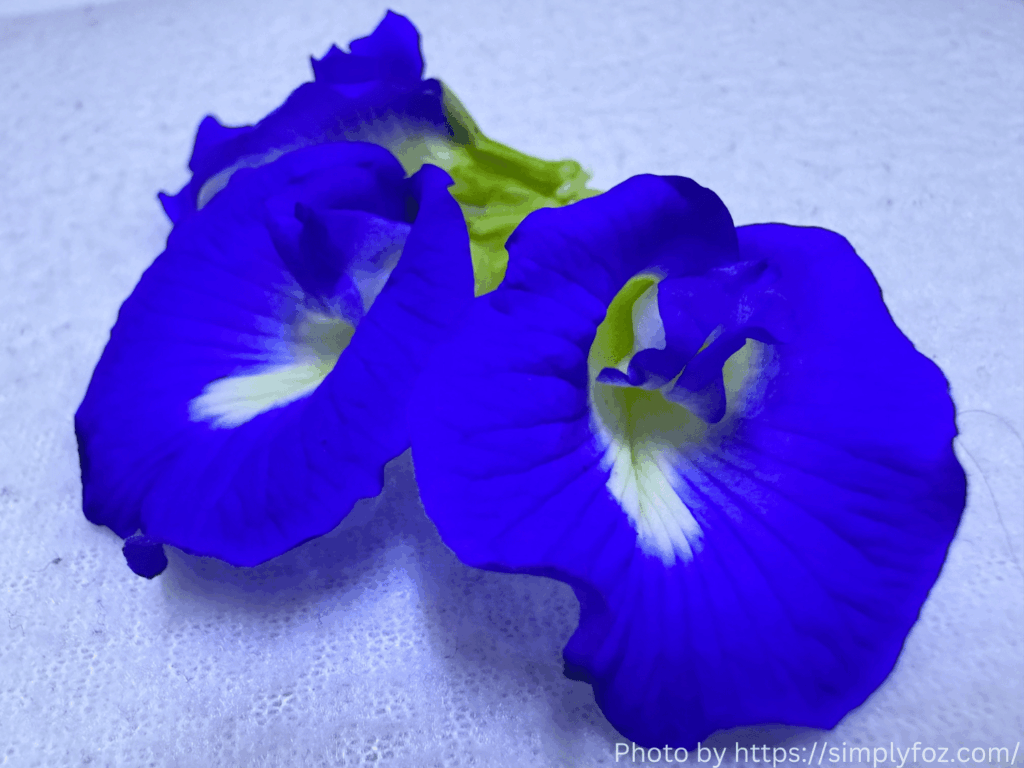
These days I’ve gathered some blue tea flowers from the garden.
Blue pea tea, also known as Asian pigeon wings or butterfly pea, has the scientific name *Clitoria ternatea*. Since we only have one tree producing flowers, harvesting them often takes longer to obtain a sufficient quantity for any culinary project. Another reason for this is the tree’s location, especially in my city’s very hot climate for most of the year. Because temperatures can be very low (below freezing), the requires frequent and frequent watering. This, in my opinion, affects flower production and foliage. It needs a typical Asian (Malaysian) climate to thrive and produce abundant, vibrant green leaves. However, starting in September, as the weather improves, the tree begins to reward us daily with its beautiful blue flowers, a delight to behold.
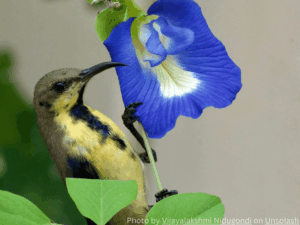
For your information, I forgot to mention that we’re not the only ones benefiting from these flowers. We have a contract with some lovely birds that we’ve noticed enjoy eating them (can birds teach us anything?). This agreement stipulates that we share in the harvest, so we keep some for these little ones to enjoy too (bon appétit! May God reward us for this). This flower is known among Asians for its use in drinking and preparing various delicious desserts, and for its beautiful natural blue color. Glory be to God! Now, let me tell you a little about the history of this flower.
History of the Blue Pea Plant
This rich flower originates from the tropical regions of Asia, where it has been used for centuries in traditional medicine and naturopathy. In traditional Indian medicine, it is used to treat anxiety, improve memory, and boost immunity. Additionally, Chinese medicine has used it to treat inflammation and promote overall health.
Uses of blue tea
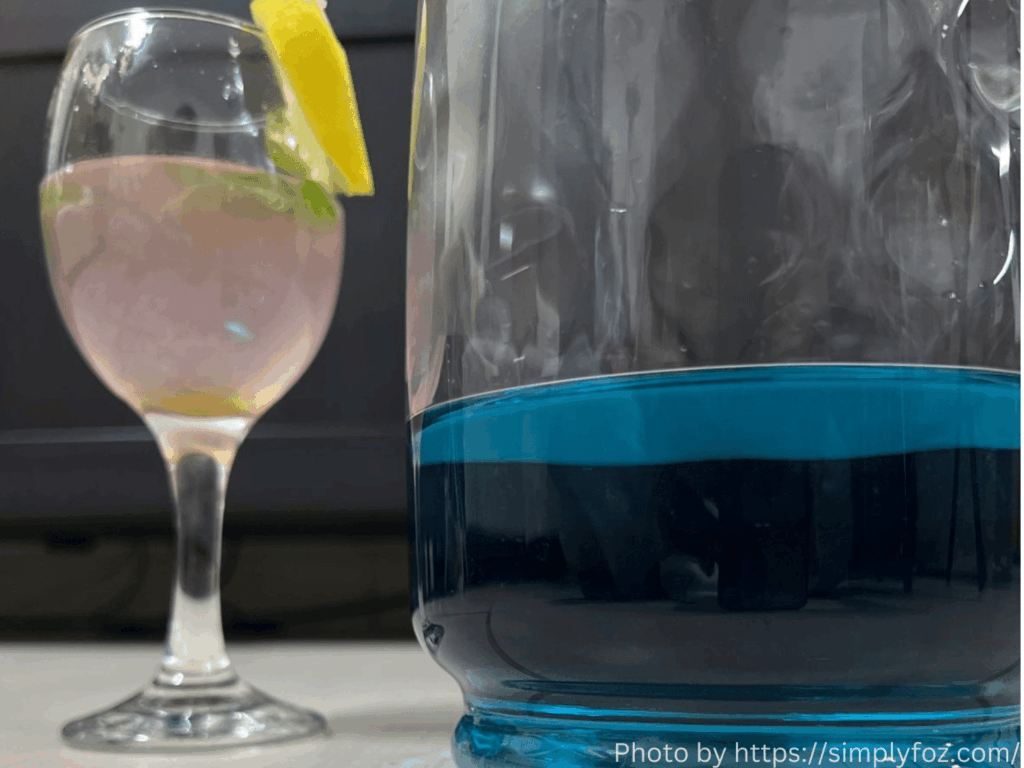
Rich in antioxidants, it’s a popular ingredient in some parts of Asia where fresh or dried flowers are used to make a blue tea (a natural color!). If you want to create a color-changing juice in your kitchen lab, simply add a squeeze of lemon, which will turn the color from blue to purple. This is due to a change in pH, giving the drink an attractive and distinctive appearance. It’s also used as a natural dye for food, textiles, and cosmetics.
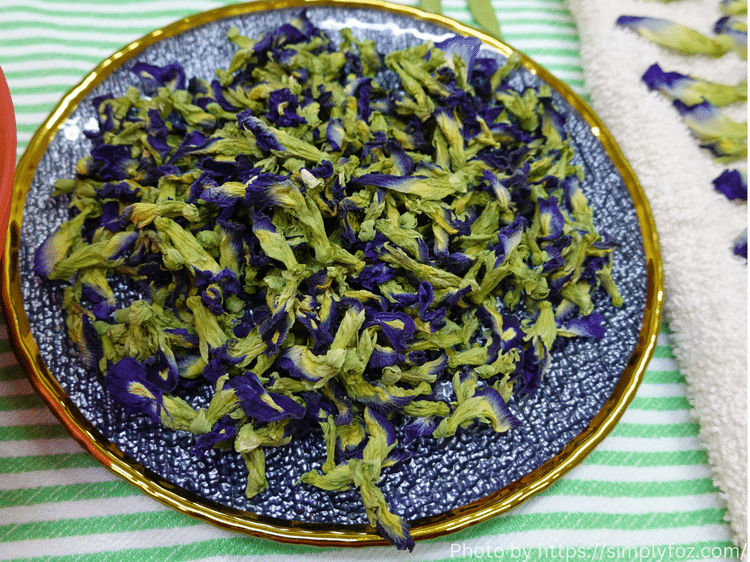
As I mentioned earlier, you can use the flowers fresh, but sometimes you may want to preserve them for later. This can be done by drying the flowers, which takes about a week if you place them in a wide dish so they have enough space to dry. Then store them in an airtight container and use them when needed.
Some of the benefits of blue pea tea
Rich in antioxidants
It enhances brain health and memory.
It helps to alleviate anxiety and stress.
Supports hair and skin health
In Asian cuisine
As I mentioned earlier, the Blue Pea flower is used as a natural food and beverage coloring in Asian cuisine. For example, it is used in the preparation of blue rice, a traditional Malaysian dish, in sweets to color jellies, cakes, and their traditional desserts, and in drinks where it is used in the preparation of cocktails and juices to give them a distinctive color.
Ingredients for making a glass of blue flower juice
Four flowers
A little warm water
Lemon
A small spoonful of honey, or as desired
How to prepare blue juice and tea at home
The flowers are placed in warm water for three minutes to extract the color from them.
Then cold water and honey are added.
If you wish to drink it like this, it is ready.
If you wish to add lemon, the drink will turn a beautiful purple color; the choice is yours.
Ingredients for making a suitable evening tea that is caffeine-free
Five flowers
hot water
Honey
The method
The water is heated, and the flowers and honey are added. You can control the desired color intensity, whether dark or light blue, by adding or removing more flowers. If it’s not available, you can order it through Amazon.
Summary
The Blue Pea flower, as you can see, is not just a beautiful flower that brings joy and delight, especially in the morning; it’s also a healthy and natural addition to the kitchen, combining health and beauty benefits. And let’s not forget moderation in all things. For more information on how to care for and grow it, you can click here on the link.

 Previous
One thought on “Blue tea flowers”
What a gorgeous flower, you taught me something new!