Traditional Wild Ghee Bread Recipe Ready in Just 30 Minutes
Table of content
Some foods do not only satisfy hunger, they nourish memory, nostalgia, and identity. They remind us of who we were, how we lived, and what we used to eat when life was simpler and hearts were closer. In an era dominated by fast food and ready-made meals, where flavors have changed and the warm home aromas have faded, Wild Ghee Bread remains one of the most treasured heritage foods that perfectly captures a complete history of simplicity, generosity, and the deep connection between people and their land. This authentic traditional bread is more than just a recipe, it is a living story passed down through generations, preserving the soul of true Middle Eastern heritage.
This bread was never just a simple meal. It was the faithful companion of long journeys, a guest at humble tables, a support for the poor, and the early morning food for parents before heading out to the fields. It was also the evening comfort for children gathered around the fire. Baked on the traditional griddle, its aroma would fill the narrow alleys, and it was shared by loving hands, transforming this simple bread into a powerful symbol of warmth, togetherness, and peace.
In this complete reference guide, we will take you step by step to discover this authentic bread, its story, its original ingredients, the correct method for making it, and the small secrets that preserve its softness and flavor. You’ll also learn how to prepare it in under 30 minutes in your own kitchen today, as if you were rekindling an old fire in your grandmother’s home.
What Is Wild Ghee Bread?
Wild Ghee Bread is a traditional folk flatbread that originated in rural and Bedouin environments, where simplicity shaped everyday life and natural ingredients were the first choice in every home. This authentic bread is made using whole wheat flour, water, and salt only, without any artificial additives or preservatives. It is then baked directly on a hot griddle, allowing its rich aroma to spread through the air, announcing that fresh homemade bread is on the way.
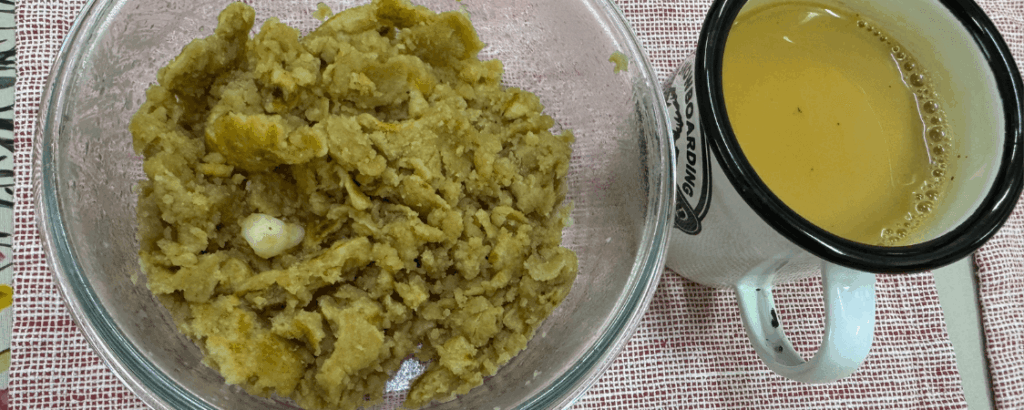
This bread was not prepared merely to satisfy hunger. It was made to accompany long days, serve as a staple breakfast, and provide a comforting dinner during cold nights. Once removed from the hot griddle, it is traditionally served with natural wild ghee. Its layers are brushed with ghee or dipped into it, allowing the warm, rich flavor to develop, where the aroma of wheat blends with the deep fragrance of ghee, creating a simple yet profoundly satisfying taste that nourishes the soul before the body.
This bread represents an entire philosophy of eating, a philosophy that believes that when food is simple, honest, and natural, it becomes far more delicious and lasting than anything overly processed.
Why Is It Called Wild Ghee Bread?
Because:
It is made from whole wheat flour.
It is most often served brushed or dipped in natural wild ghee.
It has historically been associated with rural and Bedouin communities.
Every piece of Wild Ghee Bread carries the story of a home, the crackling sound of fire, and the aroma of real ghee, childhood memories I carry within me and bring back to life whenever I prepare my family’s special bread, a living heritage that connects my past to my future.
Why Should the New Generation Learn to Make Wild Ghee Bread?
The Reason
Explanation
Preserving Identity
It is part of Arab culinary heritage.
Health
Free from artificial additives.
Economy & Affordability
Its cost is very low.
Ease of Preparation
It requires no special equipment and does not take much time.
Flavor & Taste
A flavor that cannot be compared to commercial bread.
Original Ingredients of Wild Ghee Bread
Important Note: Any additions beyond these original ingredients depend on personal and regional traditions. Some people add honey or dates and knead or crumble the bread in different ways. In the end, everyone enjoys this bread the way their ancestors taught them, preserving a unique culinary heritage passed down through generations.
Ingredient
Quantity
Whole Wheat Flour – Here is my personal recommendation, and you can purchase it from here
4 small cups
Lukewarm water
As needed
salt
A small pinch
Natural wild ghee
For serving
Required Tools
Mixing bowl
Traditional griddle or heavy pan
Small bowl of water for stretching the dough
Silicone spatula (optional)
How to Make Wild Ghee Bread Step by Step
Step One: Preparing the Dough
Place the flour in a bowl.
Add a pinch of salt.
Gradually add water while kneading until a cohesive dough forms.
Note: Do not make the dough too stiff or too soft.
Step Two: Resting the Dough
Cover the dough and let it rest for only 5 minutes.
Step Three: Heating the Griddle
Heat the griddle over medium heat until hot.
Step Four: Rolling and Placing the Dough on the Griddle
Take a ball of dough.
Place it directly onto the hot griddle.
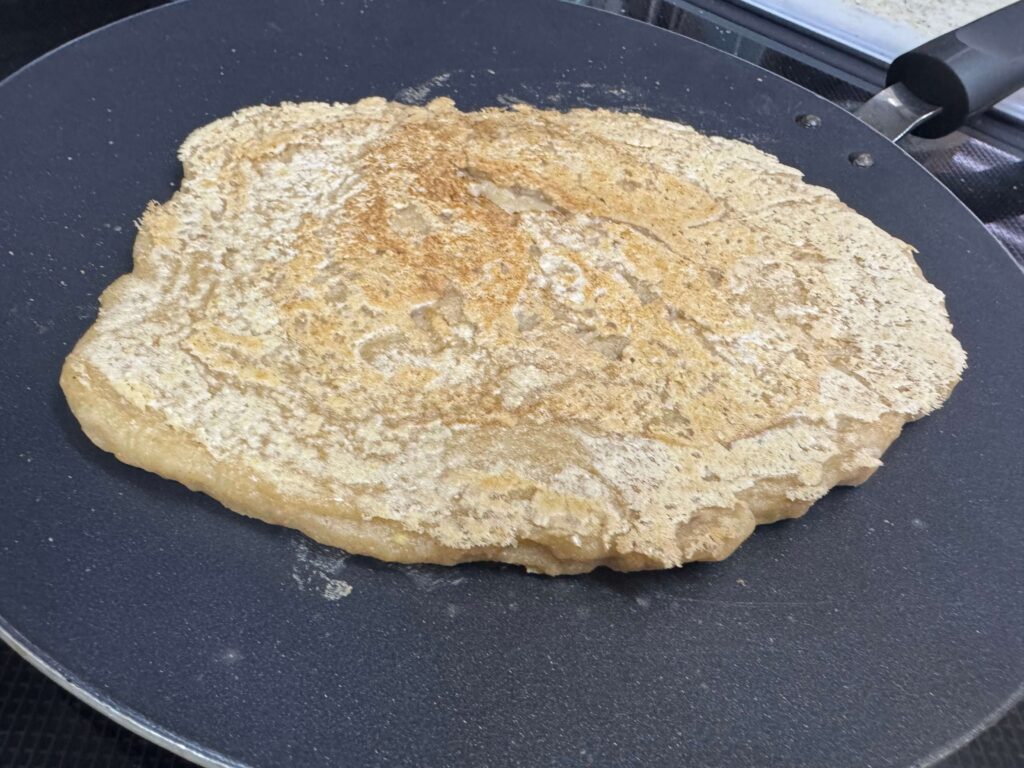
Stretch it with a wet hand until it becomes a thin circle.
Step Five: Baking the Bread
Leave the bread over low heat for 5 minutes until bubbles appear.
Flip it to the other side and leave it for another five minutes.
Visually monitor it until a lightly golden crust forms on both sides.
The Perfect Serving Method
The method
Description
Brushed with wild ghee
The Most Popular Method
Dipped in wild ghee
For a stronger flavor
Served with honey or dates
For breakfast
Served with yogurt (Laban)
As a light snack
The best way to enjoy Wild Ghee Bread is while it is still hot, because its “spirit” cannot be preserved. By this, I mean that this bread is not merely flour and water; it carries the soul of place, time, and memory. Once it cools, its generosity fades, its aroma softens, its flavor weakens, and part of its emotional warmth is lost.
There is no harm in eating it cold, but then you are simply eating bread. When enjoyed hot, however, you truly experience its story and its authentic flavor.
Mistakes to Avoid
Adding sugar or oil to the dough
Letting the dough rest for too long
Using high heat while baking
Using white flour instead of whole wheat
FAQ
Can the Bread Be Stored?
Yes, but it is best enjoyed fresh.
Can It Be Prepared on a Regular Pan?
Yes, as long as the pan has a thick base.
Conclusion
Wild Ghee Bread is not merely a recipe made to be eaten, nor is it just an ordinary bread served at the table. It is a story kneaded by hand, a memory baked on the griddle, and an identity served hot. It is the essence of a time when food was honest, ingredients were few yet full of blessing, and the aroma of bread alone was enough to gather the whole family around the fire in a single moment of warmth.
In today’s world, crowded with industrial processing, preservatives, and artificial flavors, Wild Ghee Bread redefines the true meaning of real food. It is simple in form, rich in impact, deeply satisfying in value, and gives you a sense of comfort that no packaged bread, no matter how attractive it looks, can ever provide.
Learning to make Wild Ghee Bread today does not mean you are simply learning a cooking method, it means reopening a door to your heritage, preserving a piece of your history in your kitchen, and passing on a beautiful tradition that can live with you and your children after you.
When you make Wild Ghee Bread with your own hands, you are not simply cooking. You are reviving an entire memory and bringing back a flavor that existed before we forgot the true taste of simplicity.
Important Note: Wild ghee bread is rich and filling, so it is recommended to stay physically active after eating it rather than remaining seated, to help maintain better health and body balance.


 Fawzia
 2
2
 253
253


 Previous
2 thoughts on “Traditional Wild Ghee Bread Recipe Ready in Just 30 Minutes”
What a fascinating post and wild ghee bread sounds delicious. Thank you for taking the time to share this.
Thank you, Mrs. Diane, for your comment.